
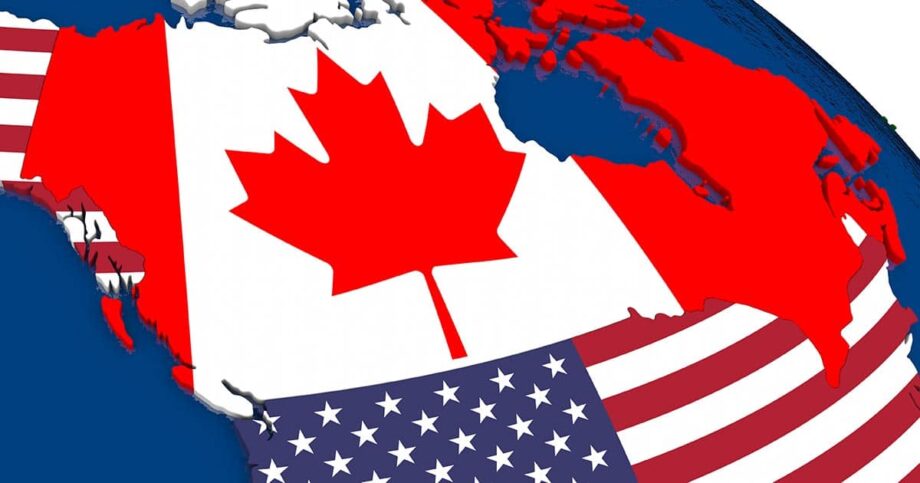
Canadian Immigration for Nigerians in the US
Canadian Immigration for Nigerians in the US
For Nigerians living in the United States, Canada offers several possible immigration pathways, including permanent residence through economic immigration, family sponsorship, provincial programs, work permits, study permits, and, in limited circumstances, refugee protection.
Being a Nigerian citizen does not automatically qualify someone for Canadian immigration. However, Nigerians who have established themselves in the United States can have strong immigration profiles because they may have U.S. education, professional experience, English-language ability, and employment histories that can be relevant to Canadian immigration programs.
The most appropriate pathway depends on several factors, including age, education, occupation, work experience, English or French proficiency, family relationships, Canadian connections, financial resources, and current U.S. immigration status.
For many Nigerians in the United States, the first programs worth examining are Express Entry, Provincial Nominee Programs, family sponsorship, Canadian employment-based work permits, and study programs.
1. Express Entry for Nigerians in the United States
Express Entry is Canada's principal system for managing applications from skilled workers seeking permanent residence.
It manages three federal economic immigration programs:Canadian Immigration for Nigerians in the US
- Canadian Experience Class
- Federal Skilled Worker Program
- Federal Skilled Trades Program
The Federal Skilled Worker Program can be particularly relevant to Nigerians living in the United States because it recognizes eligible skilled work experience acquired outside Canada.
For example, a Nigerian citizen who has lived in Texas, Georgia, Maryland, New York or another U.S. state for several years and has worked as an engineer, software developer, accountant, nurse, teacher or other skilled professional may potentially qualify for an economic immigration program.
The applicant's Nigerian citizenship does not prevent them from using the program.
In fact, the applicant's U.S. experience may be an important part of the application.
2. What Makes a Nigerian Applicant Competitive?
Canadian economic immigration evaluates a combination of factors.
A Nigerian living in the United States may have a competitive profile if they have: Canadian Immigration for Nigerians in the US
- A bachelor's, master's or doctoral degree
- Several years of skilled employment
- Strong English-language ability
- French-language ability
- A relatively young age
- Professional qualifications
- Canadian work experience
- Canadian education
- A qualifying Canadian job offer
- A provincial nomination
- A spouse with strong education and language credentials
There is no single factor that guarantees permanent residence.
For example, having a master's degree does not automatically mean that someone will receive an invitation. Similarly, having ten years of U.S. work experience does not guarantee approval.
The overall profile matters.

3. English Can Be a Major Advantage
For many Nigerians living in the United States, English-language ability is one of their strongest potential assets.
However, applicants should understand that speaking English fluently is not necessarily enough.
Where an immigration program requires a language examination, the applicant normally needs results from an approved test.
A person who has lived in the United States for ten years and works professionally in English may still need to take the required examination.
Strong test results can significantly improve an applicant's competitiveness.
Applicants who speak French in addition to English may have additional opportunities. Canada currently has a French-language proficiency category under Express Entry, and category-based selection can favor candidates meeting the applicable French-language requirements.
For a Nigerian applicant who speaks both English and French, this can be particularly valuable.
4. Nigerian Education and U.S. Education
Many Nigerians living in the United States have a combination of Nigerian and American educational qualifications.
For example, someone might have:
- A bachelor's degree from the University of Lagos
- A master's degree from a U.S. university
- Five years of professional experience in the United States
This type of profile can potentially be useful for Canadian immigration.
When foreign education is being used for an immigration program, an Educational Credential Assessment (ECA) may be required.
An ECA helps Canadian immigration authorities determine how foreign educational credentials compare with Canadian educational standards.
Applicants should not assume that an American or Nigerian degree automatically receives a particular Canadian equivalency.
The actual credential, institution and assessment results matter.
5. U.S. Work Experience Can Help
Nigerians in the United States often have professional experience that can be relevant to Canadian immigration.
For example: Canadian Immigration for Nigerians in the US
Technology:
Software developers, data professionals, cybersecurity specialists, systems analysts and other technology workers may have opportunities through economic immigration.
Healthcare:
Nurses, physicians, pharmacists, therapists and other healthcare professionals may benefit from Canada's healthcare-related immigration priorities, although professional licensing is a separate issue.
Finance:
Accountants, financial analysts, auditors and other finance professionals may qualify depending on their education and work experience.
Engineering:
Engineers and technical professionals may be competitive depending on their occupation and credentials.
Education:
Teachers and early childhood educators can potentially benefit from Canada's education-related immigration categories where they meet the specific requirements.
Skilled trades:
Electricians, plumbers, mechanics, welders and other tradespeople may have options under skilled-trades or provincial programs.
Canada's current Express Entry category-based selection includes healthcare and social services, STEM, trades, education, transport and French-language proficiency, among other categories.
The specific requirements for each category must be satisfied; simply working in a broadly related industry is not enough.
6. Canada's 2026 Immigration Priorities
Canada's immigration priorities are not permanent. They can change based on labor-market conditions, government policy and immigration targets.
In 2026, Canada has emphasized highly skilled immigration and continues to use category-based Express Entry selection to respond to economic and labor-market priorities.
This means Nigerian professionals should evaluate their occupation carefully.
Someone working in healthcare, education, a qualifying STEM occupation or certain skilled trades may have opportunities that are different from those available to someone in another profession.
Applicants should also avoid relying on old information about Express Entry scores.
The Canadian system changes over time.
7. Provincial Nominee Programs
A Provincial Nominee Program, commonly called a PNP, can provide another route to Canadian permanent residence.
Canadian provinces and territories have immigration programs designed to attract people who meet regional economic needs.
For Nigerians in the United States, provincial programs can be particularly useful if they have:
- A Canadian job offer
- An occupation in demand
- Canadian education
- Canadian work experience
- A connection to a particular province
- Strong language skills
- Work experience matching a provincial priority
A person should not automatically focus only on Toronto or Vancouver.
Some provinces actively seek workers for occupations that are needed outside Canada's largest metropolitan areas.
A provincial nomination can be extremely valuable in the Express Entry system because it can substantially improve a candidate's ranking.
However, receiving a nomination is not automatic. The applicant must meet the requirements of the specific provincial stream.

8. Canadian Job Offers: Canadian Immigration for Nigerians in the US
A Nigerian professional living in the United States may also seek employment in Canada.
A Canadian job offer can be useful for both temporary work authorization and, in some circumstances, permanent residence.
However, there is an important change applicants should understand.
Canada removed Comprehensive Ranking System points for job offers in Express Entry effective March 25, 2025. A valid job offer can still matter for eligibility in certain programs, but it no longer provides the previous 50- or 200-point CRS bonus.
Therefore, Nigerians should be cautious when someone promises:
"I will get you a Canadian job offer and that automatically gives you enough points for permanent residence."
That is no longer an accurate description of the Express Entry system.
A job offer may still be important, but its effect depends on the immigration program.
9. Canadian Work Permits
A Nigerian living in the United States may be able to obtain a Canadian work permit if they qualify under one of Canada's work-permit categories.
There are two broad types:
Employer-specific work permits generally restrict the worker to the employer and position specified in the authorization.
Open work permits allow eligible workers to work for an employer without the same employer-specific restriction.
Open work permits are available only in particular situations. They are not something every foreign worker can simply request.
For an employer-specific work permit, a Canadian job offer is generally required, and the employer may need an LMIA unless the position qualifies for an exemption.
This means the Canadian employer may have responsibilities before the worker submits the immigration application.
10. Intra-Company Transfers
Nigerians working for multinational companies in the United States should investigate whether their employer has Canadian operations.
An employee working for a multinational company may potentially be transferred to a Canadian branch, subsidiary or related company if the applicable requirements are satisfied.
This can be especially relevant for:
- Executives
- Senior managers
- Specialized-knowledge employees
For example, a Nigerian professional working for a global technology company in Atlanta might have an opportunity to transfer to the company's Canadian operation.
This is not an automatic permanent residence program.
It is generally a temporary work authorization pathway, although Canadian work experience can potentially become relevant to a future permanent-residence application.
11. Family Sponsorship: Canadian Immigration for Nigerians in the US
Family sponsorship can be one of the most direct immigration options for Nigerians who have close family members in Canada.
Canadian citizens and permanent residents may be able to sponsor qualifying family members, including spouses, common-law partners and dependent children. Certain other relatives can also qualify in specific circumstances.
For example, a Nigerian citizen living in Maryland may have a spouse who is a Canadian permanent resident.
If the sponsorship requirements are met, the applicant may have a family-class pathway that does not depend on their Express Entry score.
This can be a major advantage.
Family sponsorship is separate from economic immigration.
Someone being sponsored by a qualifying Canadian spouse does not generally need to compete for an Express Entry invitation in the same way as an economic immigrant.
However, the relationship and the sponsor must meet the applicable requirements.
12. Nigerian Families in the United States
Family situations can become complicated when Nigerian families have members with different immigration statuses.
For example, a family could consist of: Canadian Immigration for Nigerians in the US
- A Nigerian U.S. citizen
- A Nigerian U.S. green-card holder
- A Nigerian spouse with temporary U.S. status
- Children born in the United States
- A Canadian relative
Canadian immigration eligibility can differ for each person.
If one spouse qualifies for Canadian permanent residence through Express Entry, the spouse and eligible dependent children may potentially be included in the application.
This is why families should evaluate their immigration strategy collectively.
The strongest applicant is not always the person who should be the principal applicant.
Sometimes one spouse has significantly better age, education, language or work-experience factors and should be considered as the principal applicant.
13. Nigerians with U.S. Green Cards: Canadian Immigration for Nigerians in the US
A Nigerian citizen who is also a U.S. lawful permanent resident may find the Canadian immigration process practically easier than someone without stable U.S. status, particularly when it comes to travel and documentation.
However, a U.S. green card does not give the holder Canadian permanent residence.
It also does not automatically authorize the holder to work in Canada.
A Nigerian U.S. permanent resident still has to qualify for Canadian immigration or a Canadian temporary status.
The green card primarily establishes lawful U.S. residence; it does not replace Canadian immigration requirements.
14. Nigerians with H-1B Status: Canadian Immigration for Nigerians in the US
Nigerian professionals working in the United States under H-1B status may be particularly interested in Canadian options.
Many H-1B workers have:: Canadian Immigration for Nigerians in the US
- Advanced degrees
- Skilled professional employment
- Strong English
- U.S. work experience
- High salaries
- Experience in technology, engineering, healthcare, finance or other professional sectors
Those characteristics can potentially make them competitive for Canadian economic immigration.
An H-1B worker should not assume, however, that Canada will automatically approve a permanent residence application.
The applicant still needs to meet the requirements of the applicable Canadian program.
For some H-1B professionals, the Canadian strategy can provide an alternative long-term immigration option while they remain in the U.S.
15. Nigerians with Pending U.S. Immigration Cases
People with pending U.S. immigration cases should be especially careful.
A Nigerian national might be:: Canadian Immigration for Nigerians in the US
- Waiting for an asylum decision
- In removal proceedings
- Waiting for adjustment of status
- Maintaining temporary status
- Out of status
- Subject to a prior removal order
Moving to Canada can have consequences for an existing U.S. immigration case.
A person should not assume that submitting a Canadian application automatically preserves their U.S. status.
Similarly, leaving the United States may affect certain U.S. applications or proceedings.
Someone with complicated U.S. immigration history should obtain advice from an appropriately qualified professional before traveling.
16. Refugee Protection
Some Nigerians in the United States may consider Canada because they are afraid to return to Nigeria.
Canadian refugee protection is available only to people who satisfy Canada's legal requirements.
A person generally needs to establish a legally recognized basis for protection, such as persecution or a serious risk contemplated by Canadian refugee law.
Economic difficulties, unemployment, general insecurity or the desire for a better life do not automatically create refugee eligibility.
The individual circumstances matter.
For example, someone who has experienced targeted persecution because of a protected characteristic may need a very different legal analysis from someone who simply wants improved economic opportunities.
17. Nigerians Seeking Asylum from the United States: Canadian Immigration for Nigerians in the US
This is an especially important issue.
Canada and the United States have a Safe Third Country Agreement that affects many people who attempt to claim asylum in Canada after coming from the United States.
Therefore, a Nigerian living in the United States should not assume that traveling to the Canadian border and requesting asylum will automatically result in a Canadian refugee hearing.
The agreement contains exceptions and other rules, but eligibility must be examined carefully.
Someone with a pending U.S. asylum case should receive individualized legal advice before making plans to travel to Canada.
An asylum strategy should not be based on social-media rumors or advice from an unlicensed immigration consultant.
18. Studying in Canada: Canadian Immigration for Nigerians in the US
Another option for Nigerians in the United States is Canadian education.
A Nigerian student, professional or career changer may apply to study at an eligible Canadian institution.
A study permit can allow the person to pursue a Canadian educational program, subject to the applicable conditions.
For some students, Canadian education may eventually lead to Canadian work experience.
Eligible graduates may qualify for post-graduation work authorization depending on the program, institution and rules applicable at the time.
However, Canada has tightened and adjusted international-student policies in recent years.
Therefore, someone should not select an expensive Canadian program solely because they believe it guarantees permanent residence.
The program should make academic and career sense independently of immigration.
19. Financial Requirements for Students
A study-permit applicant generally needs to demonstrate that they can support themselves and, where applicable, accompanying family members.
The applicant may need to provide evidence of funds for:
- Tuition
- Living expenses
- Transportation
- Family members
- Other required costs
The amount required depends on the circumstances and current government requirements.
Someone living in the United States should not assume that a high U.S. salary automatically proves financial eligibility.
Canadian authorities look at the evidence submitted with the application.
20. Healthcare Professionals: Canadian Immigration for Nigerians in the US
Nigerians in the U.S. healthcare sector may have particularly interesting opportunities.
Canada has identified healthcare and social services as an Express Entry category.
The current category includes occupations such as physicians, nurses and other healthcare and social-services occupations. Applicants need to satisfy the specific work-experience and other requirements for the category.
However, immigration approval is not the same as professional licensing.
A Nigerian-trained nurse who is a licensed nurse in the United States may still need to satisfy Canadian provincial licensing requirements before practicing as a nurse in Canada.
The same principle applies to physicians, pharmacists, dentists, engineers, teachers and other regulated professions.
21. Teachers and Educators: Canadian Immigration for Nigerians in the US
Nigerian educators living in the United States may also have potential opportunities.
Canada's current Express Entry category-based selection includes certain education occupations, including elementary and secondary school teachers and early childhood educators.
However, teachers generally need provincial authorization to teach.
A person should therefore evaluate two separate questions:
Can I immigrate to Canada?
and
Can I legally practice my profession in the province where I want to live?
The answers may be different.
22. Nigerians in Technology
Technology workers are another important group.
A Nigerian software engineer, data scientist, cybersecurity professional or other qualifying technology worker in the United States may have several potential Canadian pathways.
These can include:
- Express Entry
- Provincial programs
- Canadian employment
- Intra-company transfers
- Other work-permit categories
STEM occupations are included in Canada's current category-based Express Entry selection, although eligibility depends on the specific occupation and work experience.
A technology worker should therefore determine the exact Canadian occupational classification corresponding to their actual duties.
Job titles alone are not sufficient.
23. Documents Nigerians Should Prepare: Canadian Immigration for Nigerians in the US
Applicants should begin organizing documentation well before submitting an application.
Depending on the program, relevant documents can include: Canadian Immigration for Nigerians in the US
- Nigerian passport
- U.S. immigration documents
- Green card, if applicable
- U.S. visa documents
- Birth certificate
- Marriage certificate
- Divorce records
- Children's birth certificates
- University diplomas
- Academic transcripts
- Educational Credential Assessment
- Language-test results
- Employment reference letters
- Pay statements
- Tax documents
- Professional licenses
- Police certificates
- Travel history
- Canadian job offer
- Canadian family member's documents
- Proof of settlement funds
The exact requirements depend on the immigration program.
Applicants should also make sure that information is consistent across their Canadian and U.S. immigration records.
24. Criminal and Security Issues
Canadian immigration applicants must be admissible to Canada.
Potential inadmissibility issues can include criminality, security concerns, medical issues and misrepresentation.
For someone who has lived in both Nigeria and the United States, Canadian authorities may require documentation relating to residence and travel history.
A criminal record in the United States can potentially affect Canadian admissibility even if the person has no criminal record in Nigeria.
Likewise, a person should not assume that an old or minor offense is irrelevant.
Canadian criminal inadmissibility rules can be complicated, particularly where the offense occurred outside Canada.
Professional legal advice may be appropriate where an applicant has any criminal history.
25. Misrepresentation
Applicants should never provide false information to Canadian immigration authorities.
This includes:
- Inventing employment
- Inflating work experience
- Hiding previous visa refusals
- Hiding immigration proceedings
- Providing false educational credentials
- Misrepresenting marital status
- Concealing criminal history
- Providing fake job offers
- Giving inconsistent information about residence
An applicant's immigration history can be examined in detail.
Trying to make an application appear stronger by providing false information can create much more serious problems than simply having a weaker profile.
26. A Practical Strategy for Nigerians in the United States
A Nigerian considering Canada should begin by identifying the primary objective.
If the goal is permanent residence
Start by assessing Express Entry and Provincial Nominee Programs.
Determine:: Canadian Immigration for Nigerians in the US
- Age
- Education
- Occupation
- Work experience
- English score
- French score
- Family situation
- Canadian connections
- CRS competitiveness
If the goal is employment
Look for Canadian employers and determine whether the position can support a work permit.
Investigate whether an LMIA is required or whether another exemption could apply.
If the goal is family reunification
Determine whether a Canadian spouse, partner or other qualifying relative can sponsor you.
If the goal is education
Choose a Canadian program based on career value and verify the current study-permit and post-graduation work rules.
If the goal is protection
Do not treat asylum as an immigration shortcut. Examine the legal basis of the claim and the consequences of coming from the United States.
Conclusion
For Nigerians living in the United States, Canada can provide several legitimate immigration opportunities.
A Nigerian professional with a strong education, U.S. work experience and excellent English may be a strong candidate for economic immigration. Express Entry remains one of Canada's primary systems for skilled-worker immigration, and the Federal Skilled Worker Program specifically allows qualifying foreign work experience.
Provincial immigration programs can create additional opportunities for people whose occupations and backgrounds match regional labor needs.
Family sponsorship can be an attractive alternative for Nigerians with qualifying Canadian relatives. Canadian citizens and permanent residents can sponsor eligible family members under Canada's family-class system.
For workers, Canadian employment can provide a potential route to temporary work authorization and, depending on the circumstances, eventually permanent residence. Nigerians working for multinational companies should also investigate whether an intra-company transfer is possible.
Students can consider Canadian education, but studying in Canada should not be viewed as an automatic permanent-residence program.
Healthcare workers, educators, STEM professionals and certain tradespeople should pay particular attention to Canada's current category-based economic immigration priorities.
Finally, Nigerians in the United States who are considering Canada because of problems with their U.S. immigration status should be particularly careful. Canadian immigration and U.S. immigration are separate systems, and leaving the United States can have consequences for an existing U.S. case. Refugee claims also involve different legal requirements from economic immigration, and the Canada-U.S. Safe Third Country Agreement can affect asylum claims made by people coming from the United States.
The best Canadian immigration strategy is therefore not necessarily the same for every Nigerian applicant. A software engineer in California, a nurse in Texas, a student in New York, a business executive in Georgia, and a Nigerian married to a Canadian citizen could have completely different pathways.
The key is to evaluate the person's age, education, occupation, U.S. immigration status, work experience, English or French ability, family situation and Canadian connections before choosing a program.
Because Canadian immigration rules and selection priorities can change, applicants should use the rules applicable at the time they apply. Anyone with a pending U.S. immigration case, previous asylum application, removal order, criminal record, prior Canadian refusal or complicated family situation should obtain individualized advice from a qualified Canadian immigration lawyer or authorized professional before making major travel or immigration decisions.
In case, if you need help with Canadian Immigration for Nigerians in the US, please fill in application below or contact us directly.