
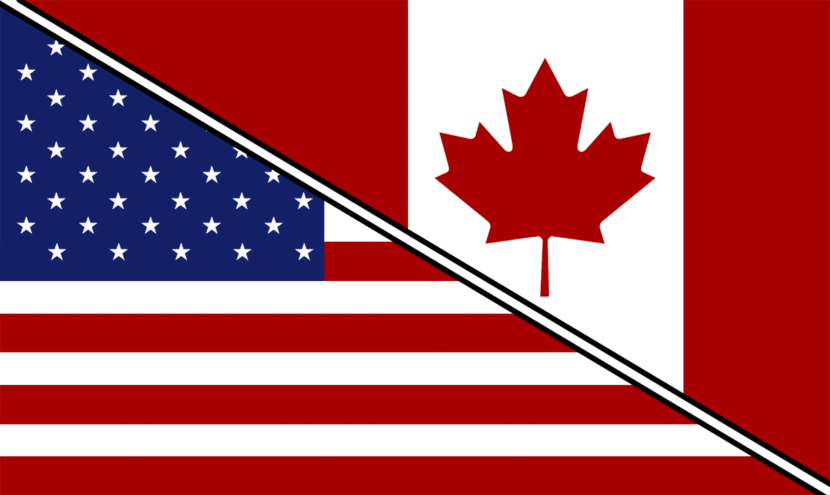
Canadian Citizenship for American Citizens

Canadian Citizenship for American Citizens
Canadian citizenship has long been an attractive prospect for American citizens seeking new opportunities, stability, and a different social and political environment. As of 2025, pathways to Canadian citizenship continue to evolve, shaped by legislative reforms, immigration priorities, and changing global dynamics. Among these developments, Bill C-3 represents a significant update to citizenship law, addressing longstanding gaps and inequities in who qualifies as a Canadian citizen by descent. For Americans considering this path, understanding both the traditional routes to citizenship and the implications of Bill C-3 is essential.
At its core, Canadian citizenship can be obtained through three primary pathways: by birth in Canada, by descent from Canadian parents, or through naturalization. For most American citizens, the relevant options are descent—if they have Canadian ancestry—or naturalization after becoming a permanent resident. Each pathway involves distinct legal requirements, timelines, and documentation, and the choice depends largely on personal circumstances such as family history, employment opportunities, and long-term goals.
The most straightforward path for some Americans is citizenship by descent. Historically, Canada has allowed individuals born abroad to Canadian parents to claim citizenship, but this system has undergone multiple revisions over the years. Prior to 2009, citizenship rules were more flexible, but amendments introduced that year imposed a “first-generation limit,” meaning that Canadian citizens born outside Canada could not automatically pass citizenship to their children also born abroad. This restriction created what became known as “lost Canadians”—individuals who had strong ties to Canada but were excluded due to technicalities in the law.
Canadian Citizenship for American Citizens
Bill C-3, as updated through 2025 policy direction, aims to address many of these issues. It expands eligibility for citizenship by descent beyond the first-generation limit under certain conditions. Specifically, it provides mechanisms for individuals with a genuine and substantial connection to Canada—through parents, grandparents, or extended residency—to claim citizenship even if they fall outside previous generational limits. For American applicants, this is particularly relevant, as many have Canadian parents or grandparents but were previously ineligible due to the strict interpretation of descent rules.
One of the key features of Bill C-3 is its emphasis on fairness and inclusion. The legislation acknowledges that earlier versions of the law unintentionally excluded individuals based on outdated definitions of parentage, legitimacy, or gender. For example, children born to Canadian mothers before certain legal reforms were not always granted the same rights as those born to Canadian fathers. Bill C-3 corrects these disparities by retroactively recognizing citizenship rights in many cases, allowing affected individuals to apply for proof of citizenship.

Canadian Citizenship for American Citizens
In practical terms, an American citizen seeking Canadian citizenship by descent under Bill C-3 must provide documentation demonstrating their lineage. This typically includes birth certificates, proof of the parent or grandparent’s Canadian citizenship, and evidence of the familial relationship. In some cases, additional documentation may be required to demonstrate a substantial connection to Canada, such as periods of residence, education, or cultural ties. While the process is largely administrative, it can be complex, especially when dealing with older records or multiple generations.
For those who do not qualify by descent, naturalization remains the most common pathway. This process begins with obtaining permanent resident status. American citizens often pursue this through economic immigration programs, such as skilled worker streams, or through family sponsorship if they have close relatives in Canada. Canada’s immigration system is points-based, meaning applicants are evaluated on factors such as age, education, work experience, language proficiency in English or French, and adaptability.
Once permanent residency is granted, the individual must meet several requirements before applying for citizenship. As of 2025, these include physical presence in Canada for at least three out of the last five years, filing income taxes as required, demonstrating adequate language skills, and passing a citizenship test on Canadian history, values, and institutions. The process culminates in a citizenship ceremony, where applicants take the oath of citizenship and formally become Canadian citizens.
Canadian Citizenship for American Citizens
For American citizens, the transition to Canadian permanent residency and eventual citizenship can be relatively smooth compared to applicants from other countries, due in part to cultural similarities and the high demand for skilled workers. However, it still requires careful planning and compliance with immigration rules. One important consideration is dual citizenship. Canada allows dual citizenship, and the United States also permits it, meaning individuals can retain their American citizenship while becoming Canadian. This dual status offers flexibility but also comes with obligations, such as tax reporting requirements to the United States regardless of residence.
Another aspect to consider is the lifestyle and legal differences between the two countries. Canada is known for its publicly funded healthcare system, which provides coverage to citizens and permanent residents, though access and wait times can vary by province. Education, social services, and labor protections are also structured differently. For many Americans, these differences are part of the appeal, but they also require adjustment and understanding of new systems.
Canadian Citizenship for American Citizens
Bill C-3 also has broader implications beyond individual applicants. It reflects a shift in Canadian policy toward recognizing the global nature of modern families and the importance of maintaining ties with citizens abroad. By expanding eligibility for citizenship by descent, Canada is effectively strengthening its diaspora and acknowledging that national identity is not confined to geographic borders. This is particularly relevant in a globalized world where individuals often live, work, and raise families across multiple countries.
However, the implementation of Bill C-3 is not without challenges. Critics have raised concerns about administrative complexity, potential backlogs in processing applications, and the need for clear guidelines to ensure consistent decision-making. For applicants, this means that patience and thorough preparation are essential. Legal advice or assistance from immigration professionals can be beneficial, especially in complex cases involving multiple generations or unclear documentation.
In addition to legal and administrative considerations, prospective citizens should also reflect on their personal motivations and long-term plans. Citizenship is not merely a legal status; it represents a commitment to a country’s values, responsibilities, and community. For Americans, this may involve adapting to a different political culture, engaging with Canadian civic life, and building connections within local communities.

Canadian Citizenship for American Citizens
Economic factors also play a role in the decision. Canada’s job market, cost of living, and regional opportunities vary widely. Major cities such as Toronto, Vancouver, and Montreal offer diverse employment prospects but also come with higher living costs. Smaller cities and provinces may provide more affordable options and targeted immigration programs designed to attract newcomers. Understanding these regional differences is crucial for making informed decisions about where to settle and how to integrate into Canadian society.
Furthermore, climate and geography are practical considerations that should not be overlooked. Canada’s climate can be significantly different from many parts of the United States, particularly in terms of winter conditions. While this may be a minor factor for some, it can have a substantial impact on daily life and overall satisfaction.
From a legal standpoint, maintaining compliance with both Canadian and U.S. regulations is important for dual citizens. This includes understanding tax obligations, residency requirements, and any potential conflicts between the two systems. While dual citizenship offers advantages, it also requires careful management to avoid unintended consequences.
In conclusion, Canadian citizenship for American citizens in 2025 is shaped by both established pathways and evolving legislation such as Bill C-3. Whether through descent or naturalization, the process offers opportunities for individuals to become part of a diverse and inclusive society. Bill C-3, in particular, represents a significant خطوة toward correcting historical inequities and expanding access to citizenship for those with genuine ties to Canada. For American applicants, this means new possibilities but also the need for careful navigation of legal requirements and personal considerations.
Ultimately, the decision to pursue Canadian citizenship is deeply personal and multifaceted. It involves not only meeting legal criteria but also embracing a new national identity and way of life. With thorough preparation, an understanding of current laws, and a clear sense of purpose, American citizens can successfully navigate the path to becoming Canadian citizens and enjoy the benefits and responsibilities that come with it.
In case, if you need legal help to claim Canadian Citizenship for American Citizens, please fill in application below or contact us directly.